


Hihi – Chat & Date Nearby
4.3105.00 Reviews
App Specs
- Version
- 1.0.5
- Updated On
- License
- Free
- Downloads
- 10,000+
- Developer
- AURORACODE PTE. LTD.
- Categories
- Entertainment
- Platform
- Android
Screenshots



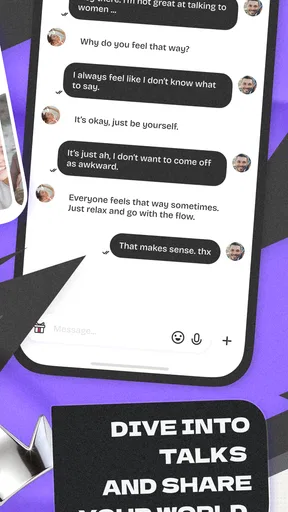

 Analysis by AppCompare
I tried Hihi – Chat & Date Nearby with a simple goal: turn the vague idea of meeting someone local into an actual conversation. That makes it more interesting than another entertainment app built only around scrolling, because its value depends on what happens after discovery. You are not just looking at profiles; you are deciding whether a nearby person feels approachable, whether the chat deserves your time, and whether an online exchange can become a comfortable local connection.
That promise also sets a high bar. A nearby match is not automatically a good match, and a message is not automatically a meaningful conversation. My experience with Hihi is best understood as a complete journey from opening the app to deciding whether to keep talking. The app can make local discovery feel more direct, but it also asks you to manage expectations, personal boundaries, and the awkward pauses that come with meeting strangers.
From wanting a local connection to starting the first chat
Hihi is a free entertainment app from AURORACODE PTE. LTD., aimed at adults who want to meet real people nearby, chat, and build local connections. Its mature seventeen-plus rating is important context: this is not something I would hand to a teenager or treat like a casual family social network. The audience is clearly adults who understand that conversations with unknown people require judgment.
The starting condition is familiar. Perhaps I have moved to a new neighborhood, finished work earlier than expected, or simply wanted to talk to someone who lives close enough for a real-world meeting to be possible. Traditional social networks can show me people I already know, while messaging apps usually depend on having a contact first. Hihi approaches the problem from the opposite direction: begin with local discovery, then see whether conversation develops.
That distinction changes how I use it. I do not open the app expecting an instant relationship or a guaranteed date. I use it as a way to widen the circle around me. The useful question is not “Will this find the perfect person immediately?” but “Can this help me identify someone nearby with whom a natural conversation might start?” Keeping that expectation realistic makes the experience less tiring.
The app’s current version is 1.0.5, and it supports devices running Android 8.0 or later. That broad compatibility makes it practical for people who do not use a recent phone, although the quality of any location-focused social experience will still depend on a stable connection and a device that handles conversations comfortably. I would check compatibility before planning around it, especially if I rely on an older handset.
The first pass: deciding what deserves attention
Once I begin browsing people nearby, the most useful habit is to slow down instead of treating every profile as a yes-or-no decision. Local apps can create a false sense of urgency because proximity feels like a rare opportunity. I found it more sensible to look for signs of conversational compatibility: a clear reason for being there, a tone that feels respectful, and enough detail to suggest an opening question.
Worth Reading Before You Choose

Flipboard Shows What News Apps Must Do Beyond the Feed

Switching to Android Auto Means Rethinking Your Driving Routine

Google Calendar Makes a Crowded Week Easier to Manage

Ludo King Makes the Most of the Minutes Between Plans

Baby Panda World Brings Quick Play to Modern Phones, but Its Game Library Feels Busy

ESPN’s Live Game View Makes Following Close Games Easier
This is one of Hihi’s practical strengths. The nearby focus gives a conversation a possible context. I can ask about local interests, familiar places, or what brought someone to the area rather than starting with an empty “hey.” That does not guarantee a reply, but it gives the first message a better chance of sounding human. The app works best when I use proximity as a conversation starter, not as proof that someone is trustworthy.
A useful workflow is to prepare two different opening messages before contacting anyone. One can refer to something visible in the person’s profile, while the other can be a neutral local question. If the first approach feels too personal, I can use the second without forcing the exchange. This small change prevents me from sending the same generic line repeatedly and helps me notice whether the other person responds to the actual topic.
I also avoid moving too quickly from discovery to personal details. Being nearby is helpful for finding common ground, but it can make the conversation feel more intimate than it really is. I would not share a home address, daily routine, workplace schedule, or financial information simply because a person appears local. Nearby should describe the opportunity, not lower the safety threshold.
Turning a profile view into a real exchange
The next step is the handoff from browsing to messaging. This is where many social apps lose momentum: the discovery screen may be engaging, but the first message demands effort from the user. Hihi’s concept is strongest when I treat that handoff as a deliberate choice. I contact fewer people, write something specific, and give the other person room to answer rather than sending several follow-ups.
In an everyday scenario, imagine finishing a late shift and wanting to meet people outside your existing work circle. I might browse nearby profiles during a break, notice someone interested in a similar kind of local activity, and send a short question that does not require a major commitment to answer. If the response is warm, I can continue later when I have time. If it is vague or uncomfortable, I can let the conversation end without trying to rescue it.
That pause between messages matters more than it sounds. A local connection is not improved by constant notifications or pressure to reply immediately. I prefer using Hihi in short sessions: discover a few possibilities, start one or two thoughtful chats, then close the app. This makes it feel like a tool for meeting people rather than an endless task where I measure my value by response rates.
Another non-obvious advantage of this approach is that it reveals the difference between interest and availability. Someone may be friendly but busy, curious but cautious, or simply not in the mood to chat. I try not to interpret silence as a verdict. Local social apps bring people together, but they cannot remove ordinary human timing. The more I accept that, the less frustrating the messaging stage becomes.
Managing the handoff from chat to meeting
If a conversation develops, the next handoff is more consequential: moving from in-app interaction toward a possible in-person meeting. This is the point where I would be most careful. A good chat can justify another conversation, not immediate trust. I would suggest a public place with other people around, choose a time that allows me to leave easily, and tell someone I trust where I am going.
For a first meeting, I prefer a short, low-pressure plan rather than an elaborate date. Coffee, a busy public venue, or a brief walk in a well-known area gives both people a natural exit. I would avoid accepting a request to meet at a private residence or an isolated location. If someone reacts badly to a reasonable safety boundary, that reaction is useful information and a strong reason to end the exchange.
Hihi is helpful at the beginning of this process because local discovery reduces the distance between online conversation and a possible real-world activity. At the same time, that convenience creates a trade-off. The closer someone appears to be, the easier it is to assume that meeting will be simple. I would still verify basic consistency through conversation and keep the first meeting independent of the app’s promise of convenience.
I also see a practical handoff between the app and my normal communication habits. If a chat becomes comfortable, I may eventually prefer another messaging method for planning, but I would not rush to transfer the conversation just to keep it moving. Staying within the original context for longer can make it easier to step back if the tone changes. The best workflow is not the fastest one; it is the one that preserves control.
What success looks like after the first conversation
The result of using Hihi does not have to be a date. A useful outcome might be discovering one person who shares a local interest, finding someone to chat with occasionally, or realizing that a certain type of interaction is not what I want. That broader definition of success suits the app’s entertainment category better than treating it as a guaranteed matchmaking service.
When a conversation works, the nearby element becomes genuinely valuable. A connection can develop around ordinary life rather than an abstract profile: a neighborhood, a shared routine, or the simple fact that both people are available in the same area. That local context can make messages easier to continue and can give a first meeting a practical reason to happen.
Still, I would judge the result by conversation quality rather than by the number of profiles viewed. More choices can create more hesitation, and a large-looking pool does not tell me whether the people I want to meet are active, compatible, or responsive. Hihi’s public reach includes over ten thousand installs, while its average rating is 4.3 from around 1.4 thousand ratings. Those figures suggest an established early audience, but they should not be read as a promise that every neighborhood will feel equally active.
This is where location matters in a very practical way. In a dense city, nearby discovery may feel lively and useful. In a smaller town or a place where few people use the app, the same workflow could become repetitive quickly. I would give it a fair trial, but I would not abandon every other way of meeting people simply because Hihi is installed on my phone.
Where the experience becomes less comfortable
The biggest weakness is built into the concept: local discovery can be appealing and uncomfortable at the same time. I have to think about what “nearby” reveals, how much information I am comfortable sharing, and whether a conversation is moving at a healthy pace. Anyone looking for complete anonymity should probably skip Hihi, because the local angle is central to its usefulness.
I would also skip it if I want a tightly organized dating service with extensive compatibility tools or a platform designed mainly for people I already know. Hihi is better suited to open-ended discovery and casual conversation. A conventional dating app may be a better choice for someone who wants clearly defined romantic intent, while a community forum or interest group may work better for someone who wants shared activities without the pressure of one-to-one matching.
There is also a financial point to consider. The app is free to start, but its in-app purchases range from ninety-nine cents to four hundred ninety-nine dollars and ninety-nine cents per item. That is a very wide range, so I would inspect every purchase screen carefully and avoid assuming that free installation means every useful part of the experience will remain free. I would set a personal spending limit before exploring optional extras, especially if the app becomes part of a daily routine.
That pricing structure is not automatically a reason to reject Hihi, but it does change how I recommend using it. I would first decide whether the basic discovery-and-chat experience is genuinely useful, then consider any optional purchase only when I understand exactly what it changes. If I feel pushed to pay before I have even had a worthwhile conversation, I would stop rather than spend out of frustration or curiosity.
Another friction point is emotional rather than technical. Conversations can fade, people can be inconsistent, and local availability can make rejection feel more personal because the other person may live close by. I found that the healthiest approach is to keep the app in proportion: use it for a few intentional interactions, take breaks, and do not let an unanswered message dictate the rest of the day.
Who will get the most from Hihi
I would recommend Hihi to an adult who has recently moved, works remotely, spends much of the week alone, or wants to expand a local social circle without relying entirely on existing contacts. It is also a reasonable option for someone who enjoys starting conversations but wants local relevance instead of a broad, disconnected audience.
It is less suitable for people who dislike speaking with strangers, need strong identity or compatibility filters before chatting, or want a platform centered on established communities. It may also disappoint anyone expecting instant replies or a guaranteed romantic outcome. The app creates an opening; the user still has to bring patience, social judgment, and a clear sense of boundaries.
My most useful tip is to define the outcome before opening it. If I want a date, I can be honest about that without pressuring anyone. If I want local conversation, I can avoid presenting every chat as a romantic test. This makes the app more flexible and reduces misunderstandings during the handoff from casual contact to a more personal connection.
My final take after following the whole workflow
Hihi succeeds when I use it as a focused bridge between local discovery and genuine conversation. The path is straightforward: notice a nearby possibility, send a thoughtful opener, allow the chat to develop, and decide carefully whether an in-person meeting makes sense. Its strongest idea is the local context, because it gives a conversation more substance than a completely random introduction.
Its limits are just as clear. Proximity does not equal compatibility, a free download can lead to optional spending, and the move from chat to meeting requires more caution than the friendly interface may suggest. I would not use it as my only way to meet people, and I would not treat activity in one area as representative of every location.
Overall, I see Hihi as a useful adult social-discovery app for people willing to do some of the work themselves. The developer, AURORACODE PTE. LTD., has positioned it around a simple idea, and the current 4.3 average gives it a solid first impression among its early audience. My recommendation is to try it with modest expectations, a firm safety routine, and a spending boundary. If you want nearby conversations and are comfortable with the uncertainty of meeting strangers, it is worth exploring. If you want guaranteed matches, complete anonymity, or a highly structured dating process, another kind of app will probably serve you better.
Pros
- Nearby discovery makes it easy to meet people in your area.
- Simple chat tools support quick conversations after matching.
- Profile browsing is straightforward for new users.
- Useful for casual dating and making local connections.
- Mobile-focused design feels convenient for on-the-go use.
Cons
- The nearby focus may raise privacy concerns for some users.
- Match quality can vary depending on the number of local members.
- Some features may require in-app purchases or a subscription.
- Users may encounter inactive
- incomplete
- or misleading profiles.
- Availability and community size can differ significantly by location.
FAQs for Hihi – Chat & Date Nearby
What is Hihi – Chat & Date Nearby, and how does it work?
Hihi – Chat & Date Nearby is a social and dating app designed to help users discover people nearby, start conversations, and potentially build new friendships or romantic connections. After creating a profile, you can browse available users, view shared information, and interact through the app’s communication tools. The experience depends heavily on your location, profile quality, and the number of active users in your area.
Is Hihi – Chat & Date Nearby free to download and use?
The app can generally be downloaded without an upfront purchase, but some features may require in-app payments, subscriptions, or virtual credits. Depending on the current version, advanced discovery options, messaging privileges, profile visibility tools, or other premium functions may be limited for free users. Before confirming a purchase, review the pricing, renewal terms, and subscription settings shown in the relevant Android or iOS store.
Is Hihi – Chat & Date Nearby safe for meeting and chatting with strangers?
As with any dating or location-based social app, safety depends on how carefully you use it. Avoid sharing your home address, financial information, passwords, or private documents, and be cautious if someone quickly asks for money or tries to move the conversation elsewhere. Use blocking and reporting tools when available, verify suspicious profiles, and arrange first meetings only in busy public places.
Does Hihi – Chat & Date Nearby require access to my location?
Because Hihi focuses on finding and interacting with people nearby, location access may be important to its main functionality. The app may use approximate or precise location information to show local profiles or calculate distance, depending on the permissions you grant. Check the permission request carefully and choose the least intrusive option that still provides the experience you want. You can usually change access later in your device settings.
How can I improve my experience and profile on Hihi?
A complete, honest, and respectful profile usually attracts better conversations than a profile with only a username or a single unclear photo. Use recent pictures, write a short description of your interests, and communicate politely without sending repeated or unwanted messages. Keep expectations realistic, since the number of nearby matches can vary significantly by city, age range, activity level, and the filters available in your version of the app.


